

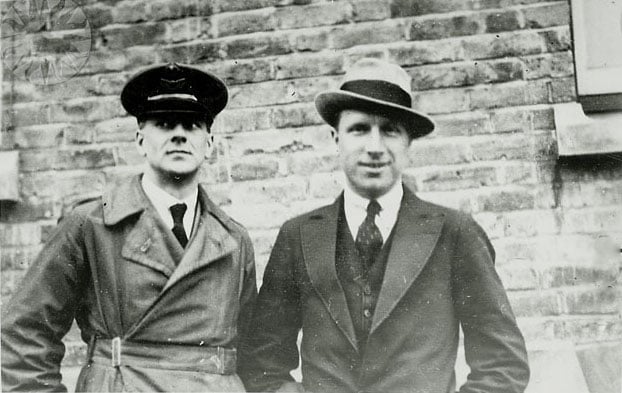
When people think of the first non-stop flight across the Atlantic, the name John Alcock usually comes to mind. But every great achievement has a partner.
One hundred and forty yeas ago, on 23 July 1886, Arthur Whitten Brown was born in Glasgow. Thirty-three years later he and pilot John Alcock would make aviation history by completing the first non-stop flight across the Atlantic from Newfoundland to Ireland.
While Alcock flew the converted Vickers Vimy bomber through fog, cloud and freezing temperatures, it was Brown, serving as navigator, who plotted their course. Using little more than a sextant, compass and without any modern instruments such as satellite navigation or GPS, every single calculation mattered. It was a remarkable demonstration of skill.
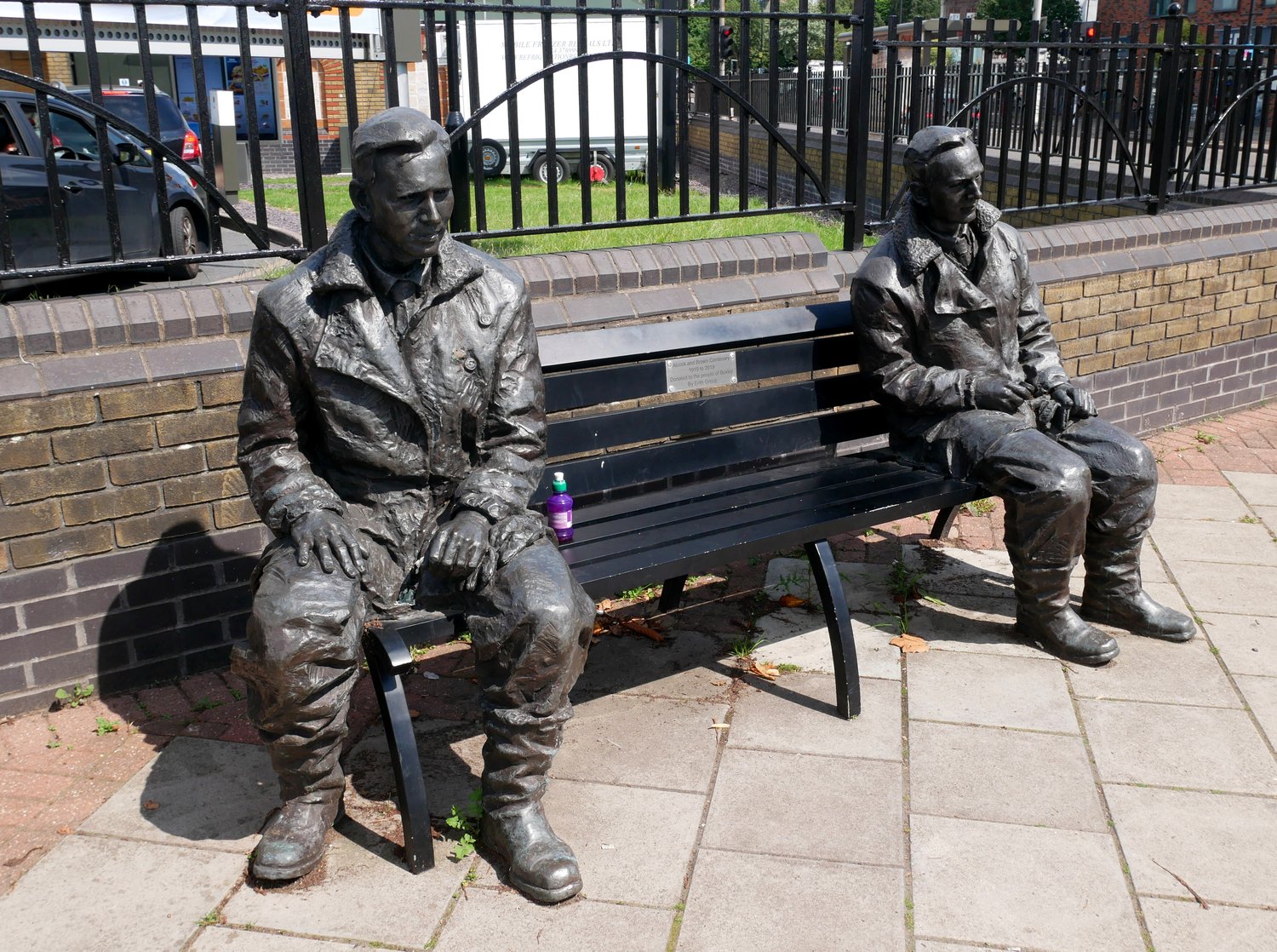
Sculpture of John Alcock and Arthur Whitten Brown outside the location of the old Vickers factory in Crayford, London Photo Ethan Doyle White CC BY-SA 4.0
After almost 16 exhausting hours in the air, they landed safely in County Galway on 15 June 1919, proving that transatlantic air travel was possible and opening the door to the global aviation network we take for granted today.
Although Brown spent much of his life outside Scotland, he never lost the distinction of being a Glaswegian who helped change the course of aviation history.
His story is a reminder that some of Scotland's greatest contributions to the world have come not from those seeking fame, but from people whose determination, knowledge and courage helped make the impossible possible.
Perhaps today is a good day to look to the skies, watch an aircraft pass overhead and remember that one of the pioneers who helped make international air travel a reality was a Scot.
This is part of our series, celebrating the people, places and moments that helped shape Scotland and the global Scottish family.