
The first movie to use professional actors, and feature the earliest use of special effects, was a recreation of one of the most famous moments in Scottish history.
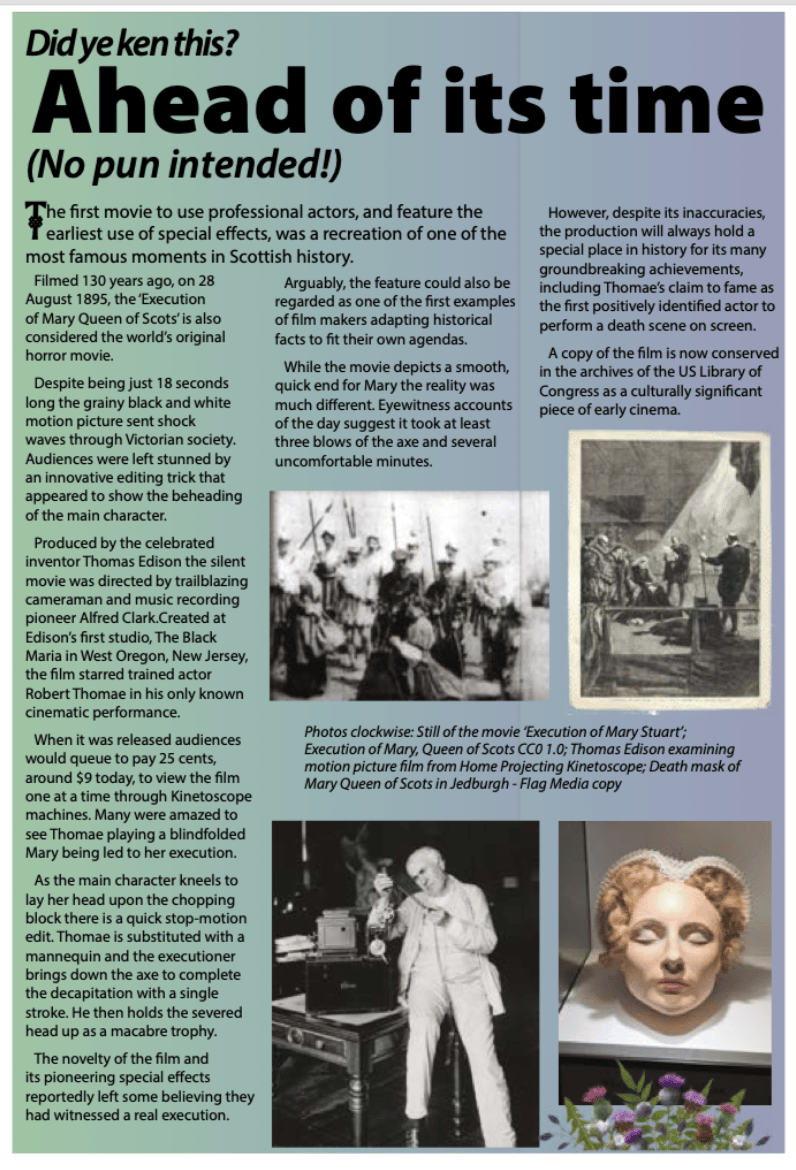
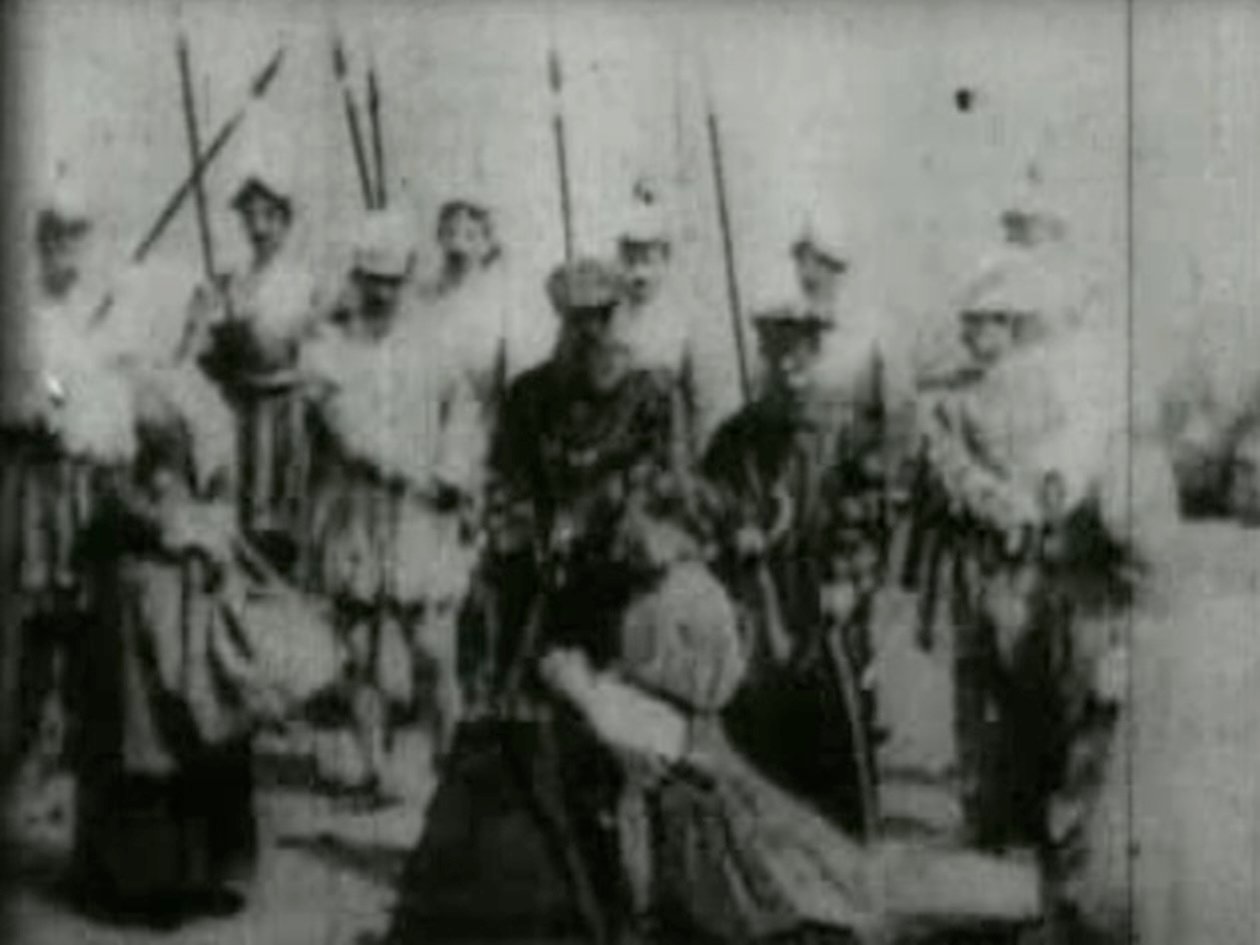
Filmed 130 years ago, on 28 August 1895, the ‘Execution of Mary Queen of Scots’ is also considered the world’s original horror movie.
Despite being just 18 seconds long the grainy black and white motion picture sent shock waves through Victorian society. Audiences were left stunned by an innovative editing trick that appeared to show the beheading of the main character.
Produced by the celebrated inventor Thomas Edison the silent movie was directed by trailblazing cameraman and music recording pioneer Alfred Clark.
Created at Edison’s first studio, The Black Maria in West Oregon, New Jersey, the film starred trained actor Robert Thomae in his only known cinematic performance.
When it was released audiences would queue to pay 25 cents, around $9 today, to view the film one at a time through Kinetoscope machines.
Many were amazed to see Thomae playing a blindfolded Queen Mary being led to her execution. As the main character kneels to lay her head upon the chopping block there is a quick stop-motion edit. Thomae is substituted with a mannequin and the executioner brings down the axe to complete the decapitation with a single stroke. He then holds the severed head up as a macabre trophy.
The novelty of the film and its pioneering special effects of the day reportedly left some people believing they had witnessed a real execution.
Arguably, the feature could also be regarded as one of the first examples of film makers adapting historical facts to fit their own agendas. While the movie depicts a smooth, quick end for Mary the reality was much different. Eyewitness accounts of the day suggest it took at least three blows of the axe and several uncomfortable minutes.
However despite its inaccuracies the production will always hold a special place in history for its many groundbreaking achievements, including Thomae’s claim to fame as the first positively identified actor to perform a death scene on screen.
A copy of the film is now conserved in the archives of the US Library of Congress as a culturally significant piece of early cinema.